Introduction to Impulse Responses
Learn what Impulse Responses are and how to use them to create amazing metal guitar tones
What is an Impulse Response?
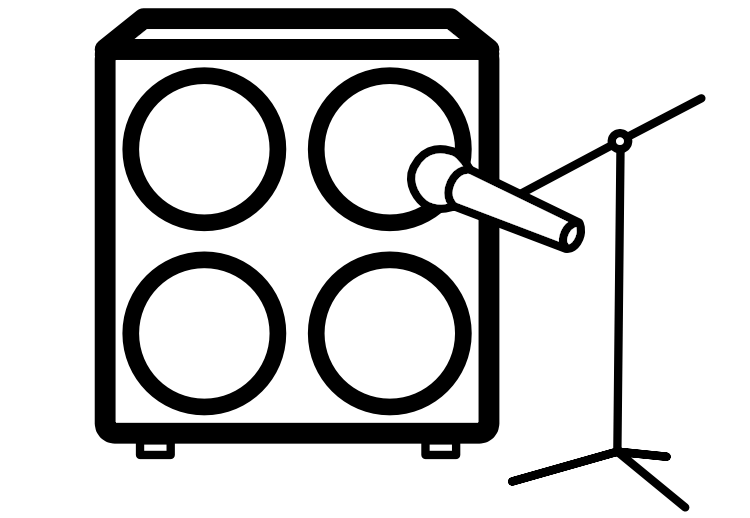
Long ago, if you wanted to record metal guitar, you’d need an amp, a massive speaker cabinet, the right microphone and a shit-hot engineer who knew exactly how to place that mic to get the sound you want. Today things are a bit simpler; amp-sims and Impulse Responses (IRs) have replaced the old ways for many modern metal musicians.
Impulse Response files are tiny WAV files which contain a tiny blip of sound. This little blip, or impulse, is used to emulate the sound of a speaker cabinet/microphone combination, which is considered one of the most important parts of a guitar tone.
Don’t believe me? Check out this raw guitar tone without an IR:
Horrible right? And now listen to the same tone with an IR:
How do you use an Impulse Response?
If your guitar tone right now sounds anything like the first example, or you’re not sure where to start, then let me show you how IRs work so you can get the guitar tone you hear in your head.
This diagram shows the signal chain of a typical metal guitar tone:

You can see the IR will be the last thing in your signal chain before your guitar is recorded. But how do we actually put get IR into the signal chain?
IR loaders are pieces of software (or in some cases hardware) which turn the blip of information in the WAV file into a reproduction of the speaker cab/microphone it was recorded with. This process is known as convolution.
You can get a free IR Loader plugin (NadIR) here.
Blending Impulse Responses
I could probably write a whole post dedicated to blending IRs so I’ll keep it brief.
Imagine you have two guitar cabinets that have distinct characteristics that you like; for example one tone you really like the sound of the bass but you’re not so fond of the high end. On the other tone you really like the sound of the high end but not the bass. Well if you have IRs of both of those cabinets, then you can blend the IRs and get the best of both worlds.
Sadly it often doesn’t go as smoothly as just playing two IRs simultaneously. In the video below I explain some of the problems you can get when trying to blend IRs.
Conclusion
Whether you’re just starting out recording guitar, or you’re switching to an all digital workflow, IRs provide access to a wide range of guitar tones inexpensively. If you need variety of guitar tones, you can find a pack of 91 IRs here. If you’re in need of some free IRs, you can get a free IR pack below.
Need some FREE Impulse Responses?
ArranCab Lite comes with 3 Impulse responses to try out. Enter your Email below to download!
 ArranBans
Leave a comment